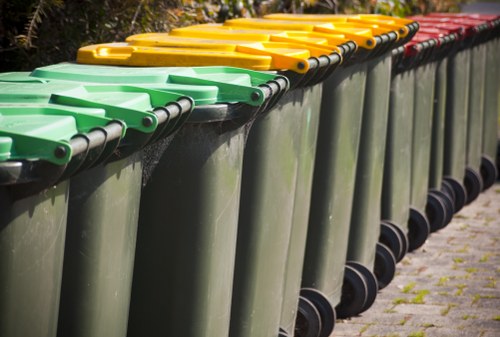
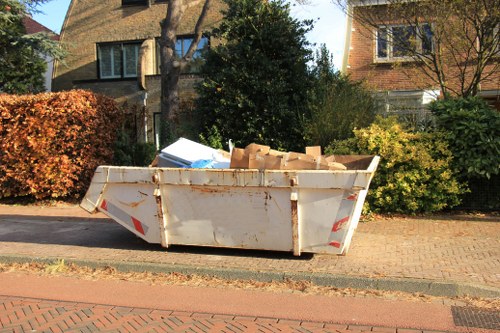
 At Hornsey Skip Hire we are committed to creating an eco-friendly waste disposal area across Hornsey and the surrounding neighbourhoods. Our local teams work every day to ensure that skip hire in Hornsey and nearby boroughs follows the highest standards of sustainable rubbish area management. We combine practical site sorting with partnerships and a low-carbon delivery model so that every job reduces landfill, supports reuse and helps the community.
Recycling and Sustainability at Hornsey Skip Hire
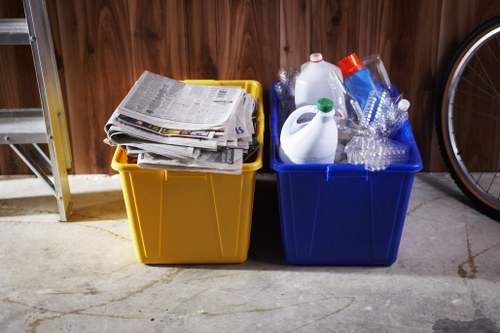 Our approach to green waste removal and commercial skip services responds to the boroughs' move toward better waste separation: food waste collections, dry recycling streams and glass banks are increasingly standard across local authorities. We adapt our collection and sorting to complement Haringey and neighbouring boroughs' policies, which helps maximise material recovery while keeping collections simple for customers.
Our Recycling Target and Performance Goals
 Ambitious targets for a sustainable rubbish area
We have set a clear target: to recycle 75% of all diverted materials by 2028. This recycling percentage target covers the full lifecycle of waste we collect from residential clearances, construction sites and small business skips. Hornsey skips will be routed and processed with this goal in mind — prioritising reuse, repurposing and specialist recycling for materials such as hardcore, timber, metals, plasterboard and mixed dry recyclables.
Local transfer stations and materials management are central to achieving our goals. We work with borough-operated transfer hubs and north London processing centres to ensure materials are taken to the correct facilities rapidly. Where practical we use local transfer stations and community recycling centres to reduce haul distances and keep transport emissions low, sending separated loads direct to facilities that accept wood, concrete, soil, and recyclables for recovery.
We also operate a strict on-site sorting protocol: bulky items are separated for donation or specialist recycling, inert materials such as brick and concrete are segregated for crushing and reuse, while mixed construction waste is sorted to recover metals and reusable fixtures. This on-site method supports a sustainable rubbish area model that reduces contamination and improves yield at downstream facilities.
Partnerships with charities are a key pillar of our sustainability programme. We partner with local and national charities to redirect usable furniture, household goods and textiles. Items suitable for reuse are offered to charities and community reuse centres rather than being disposed of. Our charity partnerships include local organisations focused on furniture reuse and clothing redistribution, helping vulnerable households while keeping items in circulation.
 Our fleet strategy emphasises low-carbon vans and efficient routing. We have progressively introduced hybrid and electric vehicles into our fleet of delivery and collection vans for Hornsey rubbish removal and skip exchanges. Route optimisation software minimises idle time and unnecessary mileage, lowering CO2 emissions per job and improving air quality in residential streets.
We also invest in staff training so drivers use eco-driving techniques and our depots are set up to charge electric vehicles using off-peak energy where possible. This combined approach (vehicle technology, smarter logistics and behavioural change) helps us deliver reliable skip hire services while shrinking our operational carbon footprint.
To support materials recovery we maintain transparent reporting on recycling performance and contamination rates. Our records track tonnages diverted from landfill, volumes reused via charity partnerships and material types processed through local transfer stations. These metrics help us refine collection methods and demonstrate progress toward the 75% recycling percentage target.
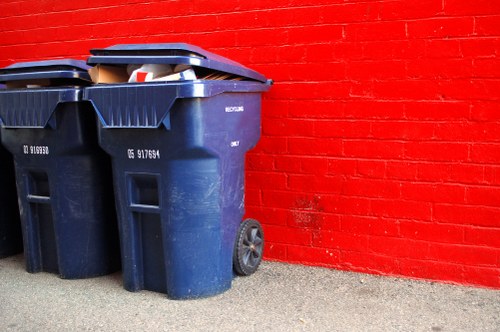 What we accept and how we sort: our crews separate commonly recycled materials including metals, clean timber, soil and hardcore, plastics from construction packaging, and segregated plasterboard for specialist reprocessors. We provide clear guidance at the point of delivery so customers know which materials to keep separate — aligning with the boroughs' approach to waste separation, such as food waste, dry mixed recycling and glass where relevant.
Why local partnerships matter: working with waste transfer stations, recycling processors and charities in north London brings resilience and local benefit. It shortens transport routes, increases the likelihood of successful recycling, and feeds secondary markets that reuse recovered materials. Our collaborations improve the viability of reuse schemes for furniture and appliances and support community projects that help reduce household waste.
Hornsey Skip Hire remains focused on continuous improvement: expanding reuse channels, increasing recycling rates and steadily transitioning to a net lower-carbon operation. Whether you need domestic clearances, commercial site skips or mixed-waste collections, our sustainable workstreams and local partnerships mean you choose a skip hire provider that treats the environment as a priority.
We will report annually on progress toward our recycling and sustainability commitments and refine targets as technology, local infrastructure and borough policies evolve. By combining practical on-site sorting, charitable re-use, local transfer station networks and low-emission vehicles, Hornsey skip hire services aim to be a model of responsible, eco-conscious waste management in the area.
Join us in supporting a greener Hornsey: use segregated material practices, prioritise reuse and choose sustainable skip hire options to protect local green spaces and reduce landfill pressure. Our commitment to an eco-friendly waste disposal area and a durable sustainable rubbish area is ongoing and rooted in measurable targets, local partnerships and cleaner operations.
Hornsey Skip Hire pledges practical action, clear targets and local collaboration to make responsible rubbish removal the standard across Hornsey and neighbouring boroughs.